24G GenNext
24G is a digital-creative brief cycle. TGA is an urban-systems academic challenge. Faculty affiliation is not university hosting.
Tech
Galaxy
Award
tga.org

The Tech Galaxy Award exists because the next generation will inherit cities, AI systems, and climate constraints we have not solved. They will not inherit our questions — they will inherit our failure to ask them well.
TGA was founded on a single conviction: that the secondary school and university years are exactly the right time for serious thinking about technology and society. Students at this stage can hold contradictions adults have learned to ignore. They can ask why a system is the way it is without first asking how to defend it.
We do not train students for a competition. We give them the conditions under which they can do real intellectual work — and we recognize them, distinctly, when they do.

Drawn from the OECD Learning Compass 2030 and the World Economic Forum's AI Literacy for Youth framework, four commitments shape every cohort.
01
Students learn what AI is, what it isn't, and what it costs — before learning how to deploy it. Worldview precedes API call.
02
A city is not its buildings. It is the distribution of opportunity its buildings encode. Designs are evaluated against this standard.
03
No team advances by recalling. They advance by defending. Every output must survive a question the team did not anticipate.
04
Public space, mobility, housing, climate, civic trust — every system carries values. We ask which values, and whose.
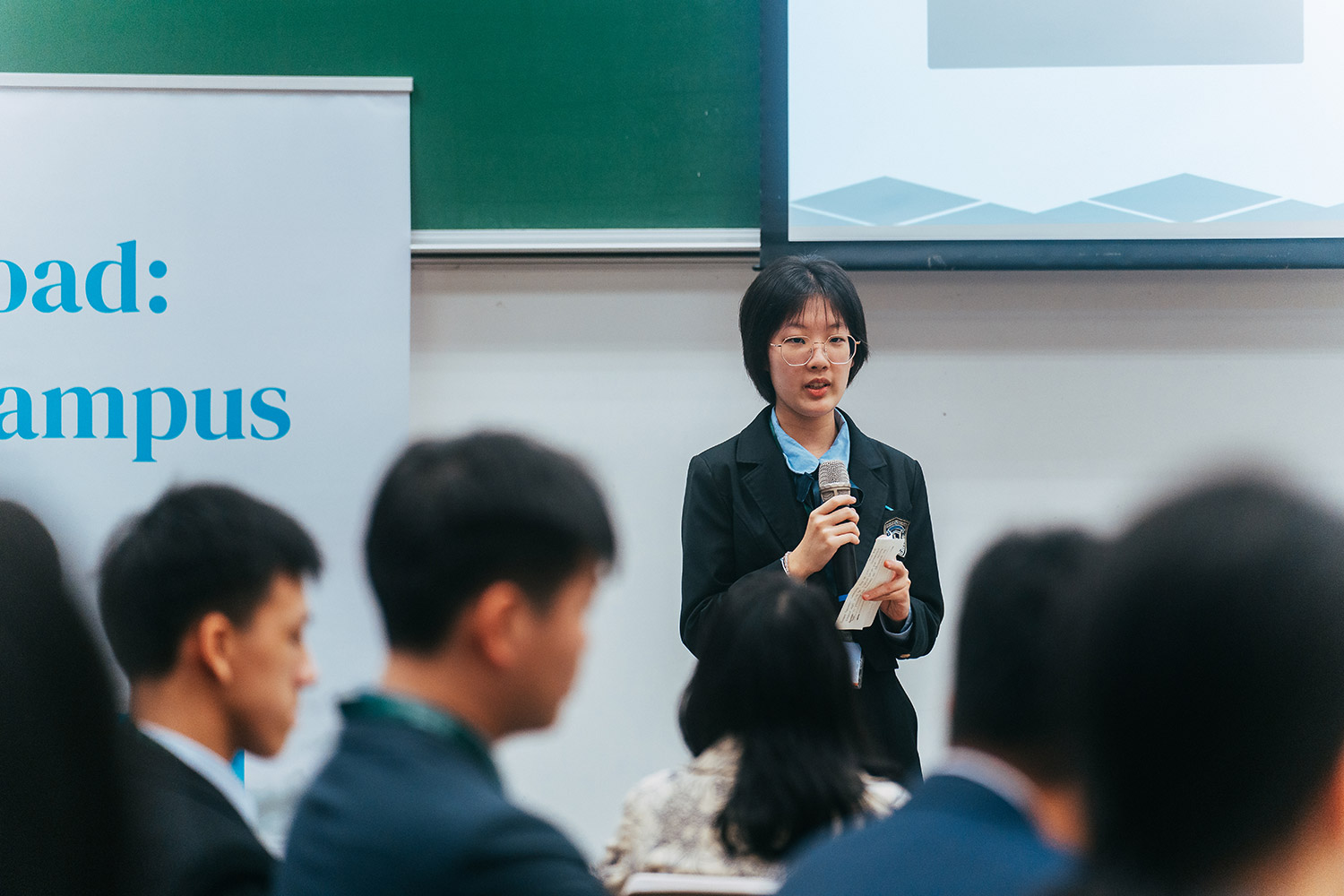
Most STEM programs target either younger children (whose engagement is play-based) or working professionals (whose portfolios are already shaped). The secondary-school and university years are routinely under-served as the years for serious systems thinking — and they are when the most consequential intellectual habits form.
Students at this stage can hold systems-level analysis. They have not yet internalized the adult instinct to defend an opinion before testing it. They can be asked, with a straight face, "why should this exist?" — and they will attempt a real answer.
We chose this window because it is structurally rare, pedagogically rich, and morally urgent. The habits formed here travel forward for decades.
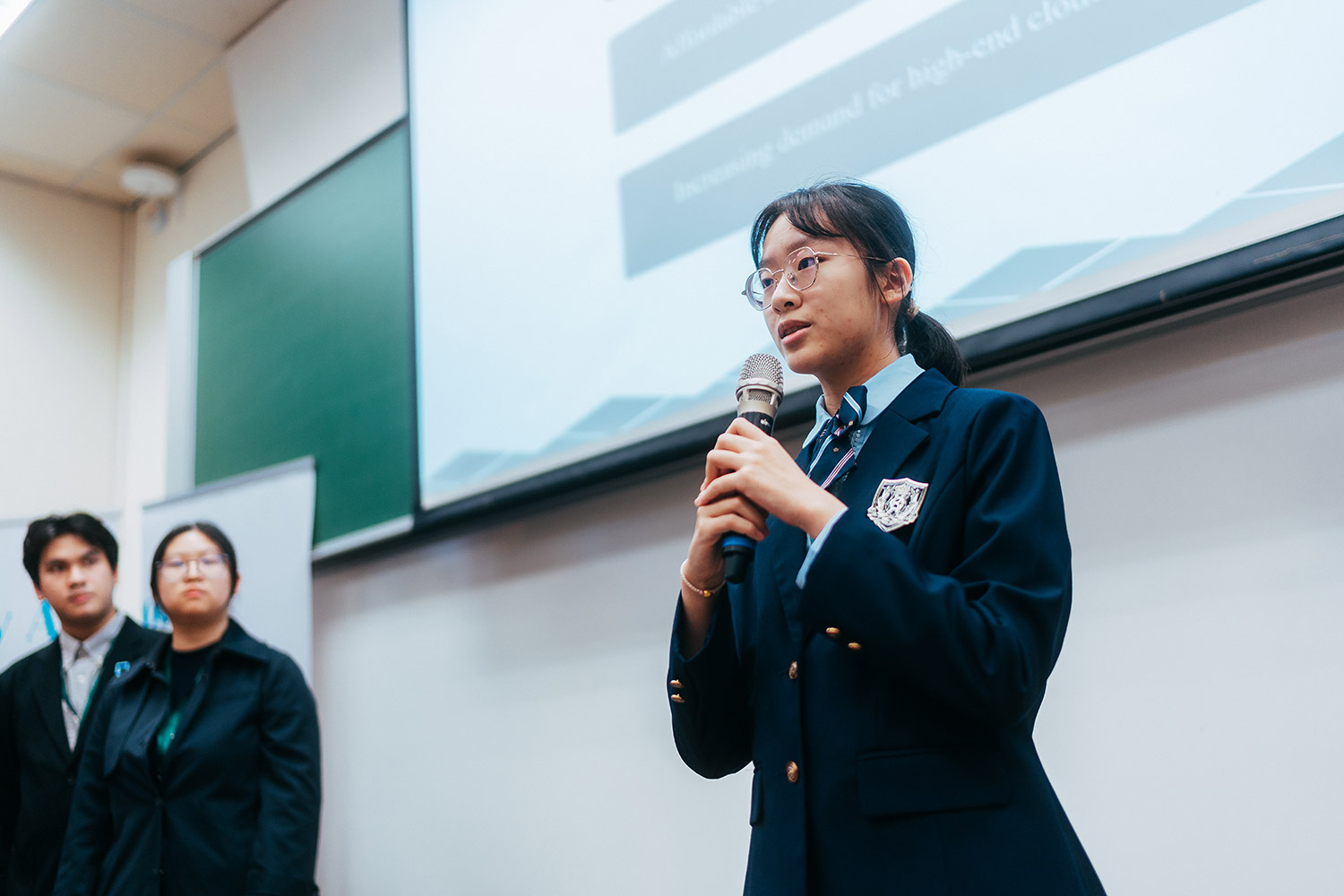
Singapore is not a backdrop. It is the curriculum.
Few cities in the world combine, at this density, the conditions TGA requires: a Smart Nation policy framework with public data infrastructure, multiple Tier-1 universities within reach of one another, a multiethnic civic compact that makes urban-justice questions visible, and an AI governance approach that is neither libertarian nor authoritarian.
Teams spend their middle days outside the seminar room — in transit nodes, housing precincts, civic spaces. Singapore lets us ask urban-design questions with the city itself as a working answer-key.
TGA's curriculum and rubric are mapped against international frameworks so that participation translates back to schools, scholarship committees, and university admissions worldwide.
Sustainable cities & communities — TGA's anchor SDG.
Learning Compass & transformative competencies framework.
AI Literacy for Youth, World Economic Forum.
Education for Sustainable Development agenda.
Approaches to Learning categories, IB.
Singapore's national digital framework.
Urban Redevelopment Authority — partner data & site access.
Research community shaping our curriculum review.
Faculty mentors and judges are drawn from our four anchor academic partners — NUS, NTU, the University of Hong Kong, and the University of Cambridge — and from allied research and policy institutions. Schools, learning centers, and corporate partners join TGA each year as cohort sponsors, mentors, or media affiliates.
Become a partnerA young award attracts hopeful comparisons. Some of them are useful. Some of them are how rumours start. This section is the negative space around the mission above.
TGA is not a national science-fair qualifier and not a Regeneron ISEF affiliate. ISEF 2026 is in Phoenix from 9 to 15 May; SSEF remains Singapore's school-level research exhibition. Students who should be on that path should take it. We will not be offended.
TGA is not an iGEM track. The 2026 Grand Jamboree is at the Paris Convention Centre, 13–16 November. The 2025 Jamboree in Paris (28–31 October) already showed the scale of that community: more than 4,600 participants, 400 teams, 50 countries. Synthetic biology is a different craft. We name it on The Field with respect and without a pipeline claim.
TGA is not the James Dyson Award, not Imagine Cup, and not the World Scholar’s Cup. Those programmes train invention, student software, and academic contest respectively. We are a Singapore summer intensive on urban problems, with AI in the reasoning, a prototype on the table, and a viva at the end of the week.
TGA is not a joint degree, a credit-bearing module, or an official university partnership vehicle. Scholars from the National University of Singapore, Nanyang Technological University, the University of Hong Kong, and the University of Cambridge mentor and sit on panels, as this site has already said. That sentence describes people. It does not describe a memorandum that admits you to those universities. Do not print "Cambridge × TGA" on a school brochure.
TGA is not a talent show, not a venture pitch night, and not a source of invented named student celebrities. The Galaxy is eight honors with a published rubric and a verifiable certificate. That is the entire glamour.
We would rather under-claim. The work is already hard; the copy does not need to be louder than the week. When we say "real urban problems," we mean problems a team can walk toward in Singapore, not a fictional mega-city. When we say "AI reasoning," we mean an argument about a method, not a product category. When we say "live academic defense," we mean ten minutes plus three, on the record, with at least one unkind question.
When we say "scholars from NUS, NTU, HKU, and Cambridge," we mean the mentors and panelists who have agreed to be in the room. We do not mean that those universities have placed their seals on your certificate. The issuer is TGA. The verifier is this website. The honor is the Galaxy line, or the participation line, and nothing we have not written into the TGA-CERT record.
If you are a journalist, that paragraph is the quote. If you are a parent, the next click is FAQ or 2026 archive. If you are a student who already knows this is the room you want, skip the rest of the internet and write the expression of interest.
Read how the cohort unfolds, see how the Galaxy honors are conferred, or write to us about bringing a team — or a school — to the next year.
See the format Talk to us